
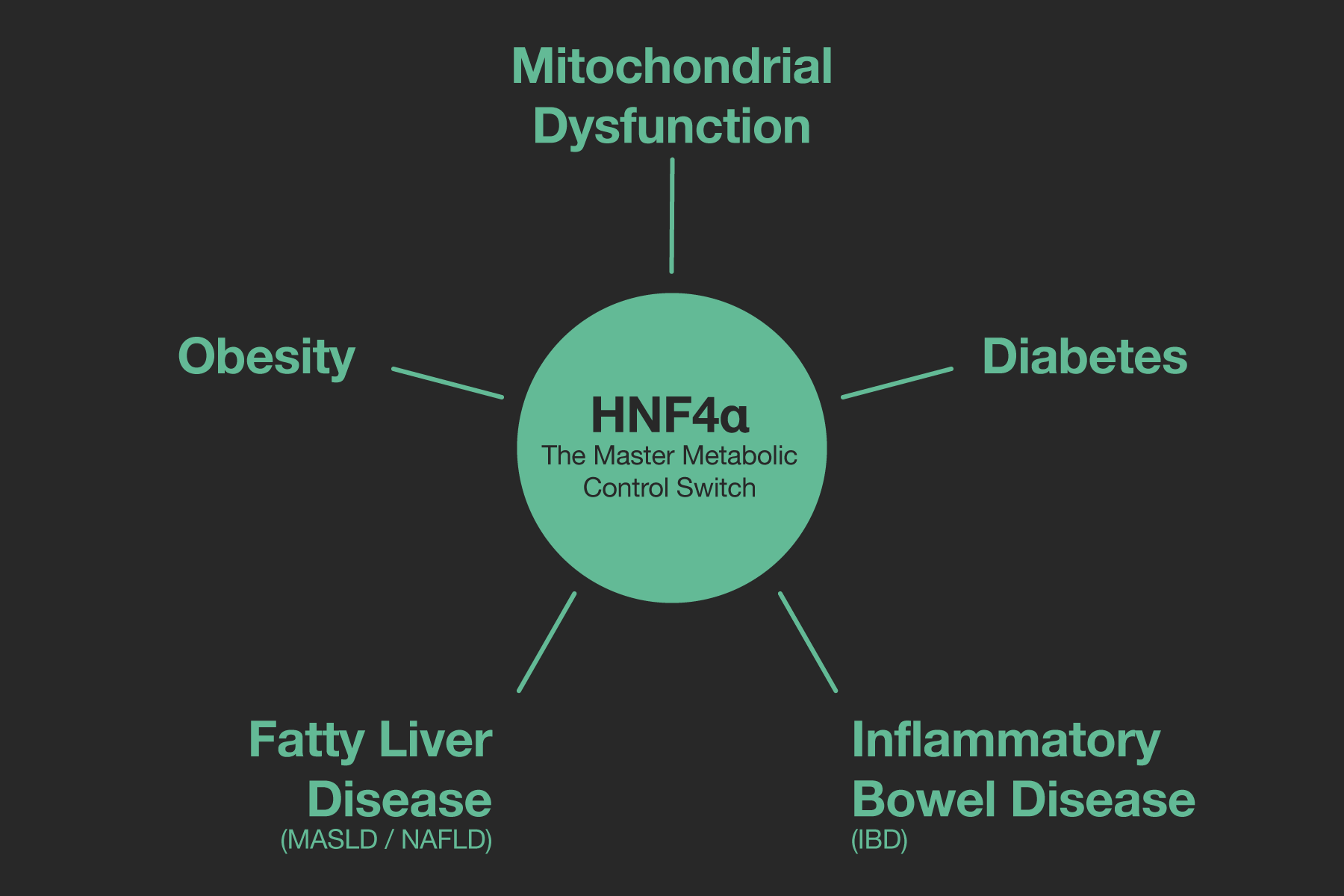
One Mechanism, Many Diseases
Obesity, type-2 diabetes, fatty liver disease, and inflammatory bowel disorders are deeply interconnected. At a biological level, they share a common upstream driver: mitochondrial dysfunction and impaired cellular energy regulation. Yet most current therapies treat these conditions in isolation.
The HNF4α receptor - the master metabolic control switch - sits at the center of this disease network. Despite strong biological validation, no selective HNF4α agonist has reached clinical development - not because the target is weak, but because suitable molecules previously have been impossible to manufacture at scale.
A Disciplined Path to Value Inflection
The pharmaceutical strategy is structured around clear, acquisition-relevant milestones. Early phases focus on composition-of-matter protection and lead optimization, followed by IND-enabling studies supported by scalable manufacturing from day one.
This aligns closely with current pharmaceutical acquisition behavior in metabolic disease, particularly as large players seek complementary mechanisms beyond GLP-1 agonists.